RGUHS Nat. J. Pub. Heal. Sci Vol No: 12 Issue No: 2 pISSN: 2249-2194
Dear Authors,
We invite you to watch this comprehensive video guide on the process of submitting your article online. This video will provide you with step-by-step instructions to ensure a smooth and successful submission.
Thank you for your attention and cooperation.
1Dr. Rashmi S Jamadar, Final year PG Scholar, Department of Shalakya Tantra, Shri Jagadguru Gavisiddeshwara Ayurvedic Medical College, Koppal, Karnataka, India.
2Department of Shalakya Tantra, Shri Jagadguru Gavisiddeshwara Ayurvedic Medical College, Koppal, Karnataka, India
3Department of Shalakya Tantra, Shri Jagadguru Gavisiddeshwara Ayurvedic Medical College, Koppal, Karnataka, India
4Department of Shalakya Tantra, Shri Jagadguru Gavisiddeshwara Ayurvedic Medical College, Koppal, Karnataka, India
5Department of Shalakya Tantra, Shri Jagadguru Gavisiddeshwara Ayurvedic Medical College, Koppal, Karnataka, India
6Department of Shalakya Tantra, Shri Jagadguru Gavisiddeshwara Ayurvedic Medical College, Koppal, Karnataka, India
*Corresponding Author:
Dr. Rashmi S Jamadar, Final year PG Scholar, Department of Shalakya Tantra, Shri Jagadguru Gavisiddeshwara Ayurvedic Medical College, Koppal, Karnataka, India., Email: rashmijamadar1998@gmail.com
Abstract
Introduction: Kinkini taila, a classical Ayurvedic formulation, has been traditionally recommended for treating various conditions like Putikarna, Karnasrava, Karnakandu, and Karnashotha. Despite its considerable therapeutic potential, scientific investigations on this taila remains limited. Antifungal agents are pharmacological compounds used to treat fungal infections; however, their efficacy is increasingly compromised by resistance, adverse effects, and limited affordability.
Aim: To evaluate the physicochemical properties and antifungal activity of Kinkini taila in vitro.
Methods: Kinkini taila was prepared following classical references. Its organoleptic characteristics, such as form, colour, taste, odour, were evaluated. Physicochemical analyses, including saponification value, iodine value, acid value, peroxide value, refractive index, specific gravity, rancidity, viscosity, were also performed. Additionally, antifungal activity was assessed against the fungal pathogens Aspergillus niger and Candida albicans.
Results: The organoleptic properties of Kinkini taila, including form, colour, taste, odour, as well as its physicochemical parameters-saponification value, iodine value, acid value, peroxide value, refractive index, specific gravity, rancidity, and viscosity, were all within normal limits. Antifungal testing revealed that Kinkini taila exhibited strong activity against Candida albicans and moderate activity against Aspergillus niger.
Conclusion: The present study demonstrated that Kinkini taila exhibits notable antifungal activity, particularly against Candida albicans and Aspergillus Niger. Considering the preliminary findings, a comprehensive analysis is warranted to evaluate the therapeutic potential of Kinkini taila in managing various ailments mentioned in classical texts.
Keywords
Downloads
-
1FullTextPDF
Article
Introduction
Among the broad spectrum of therapeutic agents, anti-fungal drugs remain some of the most frequently utilized and, unfortunately, often misused pharmaceuticals in clinical practice. The emergence of antifungal resistance among pathogenic fungal strains, coupled with the adverse effects associated with prolonged antifungal therapy, has generated significant interest in the development of alternative antifungal agents.1 These issues further underscore the need for novel, safer, and more affordable antimicrobial therapies. Aspergillus and Candida species represent two of the most clinically significant groups of opportunistic fungal pathogens, frequently responsible for both superficial and invasive infections in humans. There has been a notable diversification in the spectrum of fungal pathogens in recent years.
Ayurvedic formulations are recognized for their efficacy, minimal toxicity, and cost-effectiveness, and they are increasingly being integrated into global healthcare systems. Certain Ayurvedic formulations may serve as viable alternatives for the management of specific fungal infections, particularly in the context of increasing antifungal resistance and the limitations of conventional therapies. Kinkini taila is one such classical formulation cited in Bhaishajya Ratnavali Shirorogadhikara, recognized for its broad therapeutic spectrum and prophylactic efficacy. This formulation is utilized in the treatment of various conditions, including Putikarna, Karnasrava, Karnakandu, Karnanada, Karnashotha, Badhirya, Shiroroga, Netraroga, Manyasthamba, and Galagraha.2 In contrast to conventional agents, which primarily exert pathogen-specific effects, Kinkini taila is postulated to provide additional localized therapeutic benefits.
With increasing public interest in integrative medicine, there is a growing need to scientifically investigate and validate traditional formulations through modern research methodologies. Accordingly, the present study was undertaken to evaluate and scientifically substantiate the antifungal efficacy of Kinkini taila and to screen its physicochemical properties, thereby bridging ancient knowledge with contemporary biomedical science.
Materials and Methods
Collection of Plant Materials
The plant materials were collected from the herbal garden, ensuring selection from healthy specimens.The collected materials were subsequently washed under running tap water to remove the surface debris, dust, and other potential contaminants.
Method of Preparation3
Ingredients: Kinkini, Sahachara, Dhatura, Nirgundi, Yastimadhu, Pippali, Musta, Gandhaka, Kusta, Duralabha,Karkatashringi, Rasna, Madhurika, Jhintimoola,Langalimoola, Madhuka, Manjistha, Shigru,Vatsanabha, Sarshapa taila (Table 1).
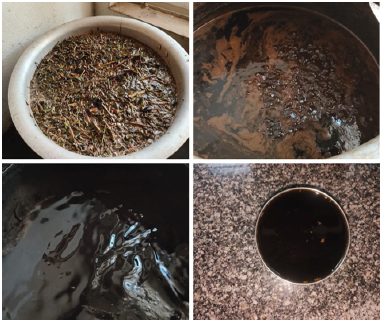
For the preparation of Kinkini taila, one kilogram of kalka of above mentioned dravyas was ground and combined with sixteen liters of water and three liters of Murchita Sarshapa taila. The mixture was then heated over mandagni. Upon attaining the appropriate taila paka lakshanas, the preparation was allowed to cool. The taila was subsequently filtered through a muslin cloth and transferred into bottles for storage (Figure 1).
Analytical Study
Organoleptic characteristics such as form, colour, taste, odour, and physicochemical parameters, including saponification value, iodine value, acid value, peroxide value, refractive index, specific gravity, rancidity, and viscosity, were analyzed for Kinkini taila.
Antifungal Study
Source of Microorganisms
The two organisms used in the study were Candida albicans (MTCC 3017) and Aspergillus niger (MTCC 10180). These strains were obtained from the MTCC and Gene Bank, IMTECH, Chandigarh, and maintained according to the prescribed specifications. Subculturing was done at the interval of 15 days.
Determination of Antifungal Activity
The antifungal activity of Kinkini taila was determined using the Sabaraud's dextrose agar well-diffusion method.22 A small amount of diluted fungal suspension was poured over the media to ensure uniform distribution across the surface. Once the surface had partially dried, wells of 8 mm diameter were punched into the agar using a stainless-steel borer and filled with 210 μL and 150 μL of the test sample in the Candida albicans and Aspergillus niger plates, respectively. Control wells containing neat solvents (negative control) were also run parallel in the same plates. The plates were incubated at 28℃ for 72 hours and the anti-fungal activity was assessed by measuring the diameter of the zones of inhibition at 24-hour intervals. The antifungal activity of Kinkini taila were determined by comparing the observed zones of inhibition with those produced by the standard antifungal agents itraconazole and fluconazole.
Results
Organoleptic Characteristics
The organoleptic properties of Kinkini taila were consistent with classical descriptions, appearing as an oil with a pinkish colour, oily taste, and characteristic odour (Table 2)
Physicochemical Analysis
Physicochemical analysis revealed that the formulation exhibited a saponification value of 72.93, iodine value of 50.76, acid value of 3.08, and peroxide value of 2.0, along with a refractive index of 1.485 and specific gravity of 1.115. The rancidity test was negative, and viscosity measured 123.140 mPas, indicating good stability and quality (Table 3).
Anti-Fungal Study
Antifungal activity against Candida albicans demonstrated a dose-dependent response, with zones of inhibition increasing from 9 mm at 30 μL to 23 mm at 90 μL, surpassing the standard itraconazole at higher concentrations (Table 4).
In contrast, activity against Aspergillus niger was mild across all tested concentrations (25-125 μL), with zones of inhibition remaining at 5 mm, whereas the standard fluconazole exhibited 10-11 mm inhibition (Table 5).
Discussion
The present study aimed to analyze the organoleptic and physicochemical characteristics, as well as the antifungal activity of Kinkini taila, an Ayurvedic formulation. The findings are consistent with the expected properties of a well-prepared medicated oil and offer insights into its quality, stability, and potential therapeutic utility.
Organoleptic Characteristics
Kinkini taila exhibited characteristic organoleptic features that serve as vital preliminary indicators of its authenticity and acceptability. The formulation appeared as an oil with a pinkish colour, likely attributable to specific herbal constituents and the processing techniques employed. It had an oily taste, typical for medicated oils, and emitted a characteristic odour, indicating proper preparation and stability of its aromatic and volatile components.
Physicochemical Parameters
Saponification value23 (72.93) - This value reflects the average molecular weight of the fatty acids present. A moderate saponification value indicates the presence of both long- and short-chain fatty acids, contributing to the emollient and penetrative properties of the oil.
Iodine value23 (50.76) - The iodine value indicates the degree of unsaturation within the oil. The value observed here denotes a moderate level of unsaturation, which is beneficial for skin absorption and therapeutic action without rendering the oil overly prone to oxidation.
Acid value23 (3.08) - This parameter measures the free fatty acid content and serves as an indicator of rancidity and degradation. The low acid value of Kinkini taila indicates minimal hydrolytic rancidity and good preservation of oil quality.
Peroxide value23 (2.0) - This is a direct measure of primary oxidation products. The low peroxide value suggests that the oil has not undergone significant oxidative deterioration, reflecting freshness and good stability.
Refractive index (1.485) - The refractive index was within the expected range for medicated oils, confirming the presence of fatty acids and essential oils in appropriate concentrations.
Specific gravity (1.115) - The relatively high specific gravity may be attributed to the presence of herbal solutes and decocted materials, further supporting the medicinal enrichment of the base oil.
Rancidity test (Negative) - The absence of rancidity indicates that the oil remains stable and suitable for use, showing no unpleasant odour or alterations associated with lipid peroxidation.
Viscosity (123.140 mPas) - The high viscosity of the formulation indicates a rich and dense oil structure, ideal for topical therapeutic applications requiring sustained action and gradual absorption.
Medicinal plants possess healing properties due to the presence of numerous bioactive phytochemicals effective against various illnesses. In the current investigation, antifungal analyses demonstrated that Kinkini taila exhibits notable antifungal activity. Specifically, results against Candida albicans showed a mild antifungal effect at the lower concentration (30 μL), whereas significant antifungal activity was observed at higher concentrations (60 μL and 90 μL), indicating a dose-dependent response. In the case of Aspergillus niger, mild antifungal effects were observed at all tested concentrations (25 μL, 50 μL, 75 μL, 100 μL, and 125 μL). These findings underscore the need for in-depth research to validate its efficacy and safety across a broad spectrum of conditions.
Conclusion
The present investigation substantiates the therapeutic potential of Kinkini taila, particularly in relation to its antifungal efficacy against Candida albicans and Aspergillus niger. The study provides preliminary scientific validation for its traditional usage and highlights its promise as a topical formulation for fungal infections. The findings contribute to the growing body of evidence supporting the pharmacological relevance of classical Ayurvedic preparations in contemporary healthcare. The current lack of scientific literature on Kinkini taila highlights a critical research gap, encouraging further experimental and clinical studies to establish its safety, efficiency, and mechanism of action.
Conflict of Interest
Dr. Veerayya R Hiremath, is an editorial board member of RJAS and co-author of this article. He was excluded from editorial decision-making related to the acceptance of this manuscript.
Acknowledgment
I would like to express heartfelt gratitude to my teachers Dr. Veerayya R Hiremath, Dr. Gururaj N, Dr. Shashikala K, Dr. Anita K, and Dr. Preethi P for their invaluable support and guidance throughout the course of this research. I also extend my sincere thanks to my college for providing the necessary resources and a conducive environment that greatly contributed to the successful completion of this work.
Supporting File
References
1. Eramma N, Devaraja G. In vitro antioxidant and antifungal activity of methanol root extract of Flacourtia indica (Burm.f.) Merr. against selected fungal species. Biomedicine 2021;41(3):616-622.
2. Sri Govinda Das. Bhaishajya Ratnavali of Shri Govinda Dasaji. Edited and Enlarged by Bhisa-gratna Shri Brahmashankar Mishra. Commented upon by Shri Kaviraja Ambikadatta Shastri, English Translation by Dr. Sanjiv Lochan. Vol 3, Shirorogashikara 152-157. Varanasi: Chaukhambha Sanskrit Sansthan; Reprint 2014. p. 334.
3. Sri Govinda Das. Bhaishajya Ratnavali of Shri Govinda Dasaji. Edited and Enlarged by Bhisa-gratna Shri Brahmashankar Mishra. Commented upon by Shri Kaviraja Ambikadatta Shastri, English Translation by Dr. Sanjiv Lochan. Vol 3, Shirorogashikara 152-157. Varanasi: Chaukhambha Sanskrit Sansthan; Reprint 2014. p. 335.
4. Sribhavamishra. Bhavaprakasha Sampoorna with Vidyotiniteeka. Edited by Pandit Sri Brahma Shankar Mishra. 12th Edition. Kinkini - Bhavaprakasha, Pooravakhanda, Prabhadradi Varga, Verse 88. Vara-nasi: Chowkhamba Sanskrit Bhavan; 2018. p. 322.
5. Sribhavamishra. Bhavaprakasha Sampoorna with Vidyotiniteeka. Edited by Pandit Sri Brahma Shankar Mishra. 12th Edition. Sahachara - Bhavaprakasha, Pooravakhanda, Guduchyadi Varga, Verse 51- 53. Varanasi: Chowkhamba Sanskrit Bhavan; 2018. p. 288.
6. Sribhavamishra. Bhavaprakasha Sampoorna with Vidyotiniteeka. Edited by Pandit Sri Brahma Shankar Mishra. 12th Edition. Dhatura - Bhavaprakasha, pooravakhanda, Guduchyadi Varga, Verse 85- 87. Varanasi: Chowkhamba Sanskrit Bhavan; 2018. p. 240.
7. Sribhavamishra. Bhavaprakasha Sampoorna with Vidyotiniteeka. Edited by Pandit Sri Brahma Shankar Mishra. 12th Edition. Nirgundi - Bhavaprakasha, Pooravakhanda, Guduchyadi Varga, Verse 113- 115. Varanasi: Chowkhamba Sanskrit Bhavan; 2018. p. 245.
8. Sribhavamishra. Bhavaprakasha Sampoorna with Vidyotiniteeka. Edited by Pandit Sri Brahma Shankar Mishra. 12th Edition. Yastimadhu - Bhavaprakasha, Pooravakhanda, Haritakyadi Varga, Verse 145- 146. Varanasi: Chowkhamba Sanskrit Bhavan; 2018. p. 256.
9. Sribhavamishra. Bhavaprakasha Sampoorna with Vidyotiniteeka. Edited by Pandit Sri Brahma Shankar Mishra. 12th Edition. Pippali - Bhavaprakasha, Pooravakhanda, Karpooradi Varga, Verse 53- 57. Varanasi: Chowkhamba Sanskrit Bhavan; 2018. p. 167.
10. Sribhavamishra. Bhavaprakasha Sampoorna with Vidyotiniteeka. Edited by Pandit Sri Brahma Shankar Mishra. 12th Edition. Musta - Bhavaprakasha, Pooravakhanda, Haritakyadi Varga, Verse 91- 94. Varanasi: Chowkhamba Sanskrit Bhavan; 2018. p. 221.
11. Sribhavamishra. Bhavaprakasha Sampoorna with Vidyotiniteeka. Edited by Pandit Sri Brahma Shankar Mishra. 12th Edition. Kusta - Bhavaprakasha, Pooravakhanda, Guduchyadi Varga, Verse 173. Varanasi: Chowkhamba Sanskrit Bhavan; 2018. p. 186.
12. Sribhavamishra. Bhavaprakasha Sampoorna with Vidyotiniteeka. Edited by Pandit Sri Brahma Shankar Mishra. 12th Edition. Duralabha - Bhavaprakasha, Pooravakhanda, Guduchyadi Varga, Verse 211- 214. Varanasi: Chowkhamba Sanskrit Bhavan; 2018. p. 262.
13. Sribhavamishra. Bhavaprakasha Sampoorna with Vidyotiniteeka. Edited by Pandit Sri Brahma Shankar Mishra. 12th Edition. Karkatashringi- Bhavaprakasha, Pooravakhanda, Guduchyadi Varga, Verse 178-179. Varanasi: Chowkhamba Sanskrit Bhavan; 2018. p. 188-187.
14. Sribhavamishra. Bhavaprakasha Sampoorna with Vidyotiniteeka. Edited by Pandit Sri Brahma Shankar Mishra. 12th Edition. Rasna - Bhavaprakasha, Pooravakhanda, Anekartha Varga, Verse 162- 164. Varanasi: Chowkhamba Sanskrit Bhavan; 2018. p. 184-185.
15. Sribhavamishra. Bhavaprakasha Sampoorna with Vidyotiniteeka. Edited by Pandit Sri Brahma Shankar Mishra. 12th Edition. Madhurika - Bhavaprakasha, Pooravakhanda, Pushpa Varga, Verse 95-97. Varanasi: Chowkhamba Sanskrit Bhavan; 2018. p. 323.
16. Sribhavamishra. Bhavaprakasha Sampoorna with Vidyotiniteeka. Edited by Pandit Sri Brahma Shankar Mishra. 12th Edition. Langalimoola - Bhavaprakasha, Pooravakhanda, Amradi Varga, Verse 88. Varanasi: Chowkhamba Sanskrit Bhavan; 2018. p. 567.
17. Sribhavamishra. Bhavaprakasha Sampoorna with Vidyotiniteeka. Edited by Pandit Sri Brahma Shankar Mishra. 12th Edition. Madhuca - Bhavaprakasha, Pooravakhanda, Haritakyadi Varga, Verse 88. Varanasi: Chowkhamba Sanskrit Bhavan; 2018. p. 322.
18. Sribhavamishra. Bhavaprakasha Sampoorna with Vidyotiniteeka. Edited by Pandit Sri Brahma Shankar Mishra. 12th Edition. Manjishta - Bhavaprakasha, Pooravakhanda, Haritakyadi Varga, Verse 188- 191. Varanasi: Chowkhamba Sanskrit Bhavan; 2018. p. 189-190.
19. Sribhavamishra. Bhavaprakasha Sampoorna with Vidyotiniteeka. Edited by Pandit Sri Brahma Shankar Mishra. 12th Edition. Shigru - Bhavaprakasha, Pooravakhanda, Guduchyadi Varga, Verse 105- 110. Varanasi: Chowkhamba Sanskrit Bhavan; 2018. p. 243-244.
20. Sribhavamishra. Bhavaprakasha Sampoorna with Vidyotiniteeka. Edited by Pandit Sri Brahma Shankar Mishra. 12th Edition. Vatsanabha - Bhavaprakasha, Pooravakhanda, Dhatvadi Varga, Verse 192. Varanasi: Chowkhamba Sanskrit Bhavan; 2018. p. 617.
21. Sribhavamishra. Bhavaprakasha Sampoorna with Vidyotiniteeka. Edited by Pandit Sri Brahma Shankar Mishra. 12th Edition. Sarshapa - Bhavaprakasha, Pooravakhanda, Dhanyadi Varga, Verse 72- 73. Varanasi: Chowkhamba Sanskrit Bhavan; 2018. p. 643.
22. Gupta N, Deopa MS, Singh A, et al. Antifungal susceptibility testing using agar-based disc diffusion method of dermatophytic isolates in a tertiary teaching institute. Int J Acad Med Pharm 2024;6(4);979-982.
23. Hassan S, Jahan R, Alam A, et al. Study on physicochemical properties of edible oils available in Bangladeshi local market. Archives of Current Research International 2016;6(1):1-6.